

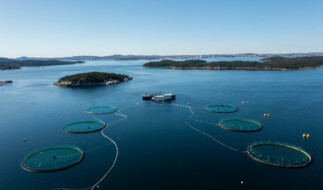
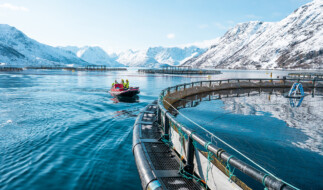
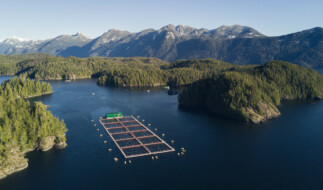
Is farmed salmon a healthy and sustainable choice?

Yes! Read on to find out why.
October is National Seafood Month in the U.S., and what better reminder to get your weekly seafood portions, including from responsibly farmed salmon – a delicious, versatile and healthy choice.
Adding responsibly farmed salmon to your diet is one way to enhance the nutrition and flavor on your table. Have you been wondering if farmed salmon is a healthy and safe choice? Then let us address some of the common questions we hear, providing clear answers based on the latest science so you can feel confident in serving it up.
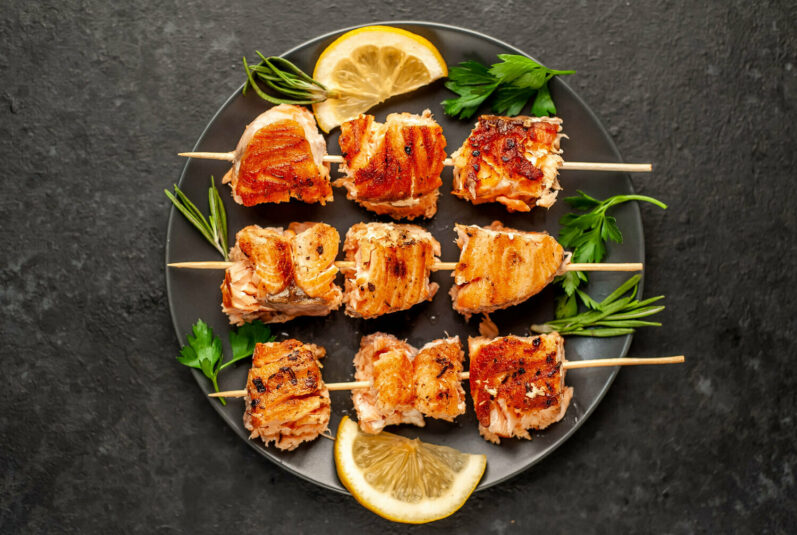
Farmed salmon has a similar nutrient profile to that of wild salmon.
1. Is farmed salmon good for you?
The short answer is, yes! Farmed salmon is loaded with nutrients and is recommended by health experts as part of a healthy diet.
Seafood is a “protein with benefits,” as the experts at the Seafood Nutrition Partnership have noted – because it contains essential omega-3s, can help with children’s healthy brain and eye development and improve memory in older adults. In fact, a recent systematic review found that pregnant women who consume more seafood have babies with higher IQs – by up to 7.7 IQ points. Research also shows that eating seafood at least twice a week helps maintain a healthy heart and reduces the risk of cardiovascular diseases.
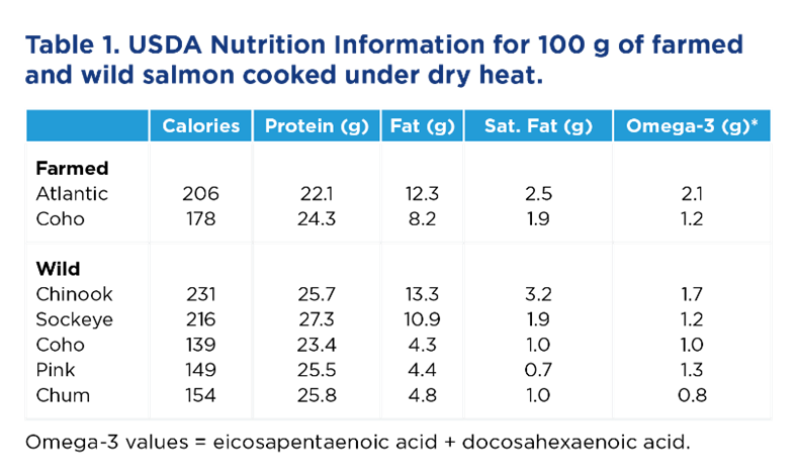
Both farmed and wild salmon have similar nutrient profiles, they are nutrient-dense, contributing high-quality protein, healthy fats like omega-3 fatty acids, and essential vitamins and minerals like potassium, vitamins D, B-12 and B-5 to the diet. Research from 2020 shows that farmed varieties can be better sources of omega-3 fatty acids than wild, but overall, the data shows there is no consistent difference in the health benefits of consuming either wild or farmed salmon. Health authorities, including the U.S. Department of Health and Human Services, state that both wild or farmed salmon can be consumed as part of a healthy diet.
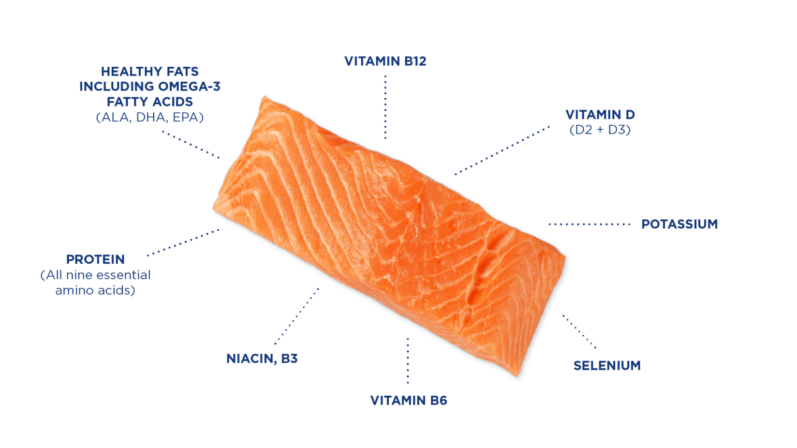
Farmed salmon contributes healthy fats, protein and essential vitamins and minerals.
The chart below shows a breakdown of the nutrient profiles of various farmed and wild salmon species.[1]
2. Is color added to farmed salmon?
You may have seen the statement, “color added,” on some farmed salmon product labels. This refers to astaxanthin, the antioxidant included in the feed for farmed fish which provides the nutritional and health benefits salmon get from eating krill in the wild. Astaxanthin is a carotenoid, so just like algae, krill and even carrots, it’s an antioxidant pigment that gives salmon its iconic color.
Farmed salmon feed is typically comprised of a mix plant-based ingredients and fish-based ingredients (including fishmeal, oil and protein), as well as vitamins, minerals, amino acids and astaxanthin. This diet replicates salmon’s omnivorous diet in the wild.
No matter how the salmon get astaxanthin in their diet, whether in feed or in the wild, it’s a necessary and vital part of a salmon’s diet for proper nutrition. This antioxidant is even directly consumed by humans! You can buy astaxanthin at your local health food store and take it as a supplement, but it’s much easier to get the benefits from eating it as part of a whole food like salmon.
3. Is farmed salmon higher in PBCs and mercury than wild salmon?
Research from 2020 shows farmed salmon is low in dioxins and has far less exposure to polychlorinated biphenyls (PCBs) and dioxins than wild salmon.
PCBs are human-made chemical compounds that linger in the environment and build up in the food chain. If there are PCBs present in the surrounding environment or in smaller fish salmon eat, then the salmon – both wild and farmed – will be exposed to PCBs. However, due to innovation and improvements in the diets for farmed salmon, the levels of PCBs present are much lower than they were a few years ago.
Both wild and farmed salmon have much lower mercury levels than most other fish species. Farmed salmon has on average, 0.05 micrograms of mercury per gram. This is well below the levels deemed safe for women and children by the U.S. Food & Drug Administration (FDA). Because of this, the FDA considers salmon a “best choice” seafood for infants children, adults, and those who are pregnant or breastfeeding.
4. How do I tell if the farmed salmon I’m buying is sustainable?
When buying farm raised, first, look for the Aquaculture Stewardship Council (ASC) logo, which provides the greatest level of assurance that the farmed fish is independently verified to be raised to the highest environmental and social standards. If you don’t see the label, ask your fishmonger if they source sustainably certified farmed seafood varieties, like ASC or Best Aquaculture Practices (BAP).
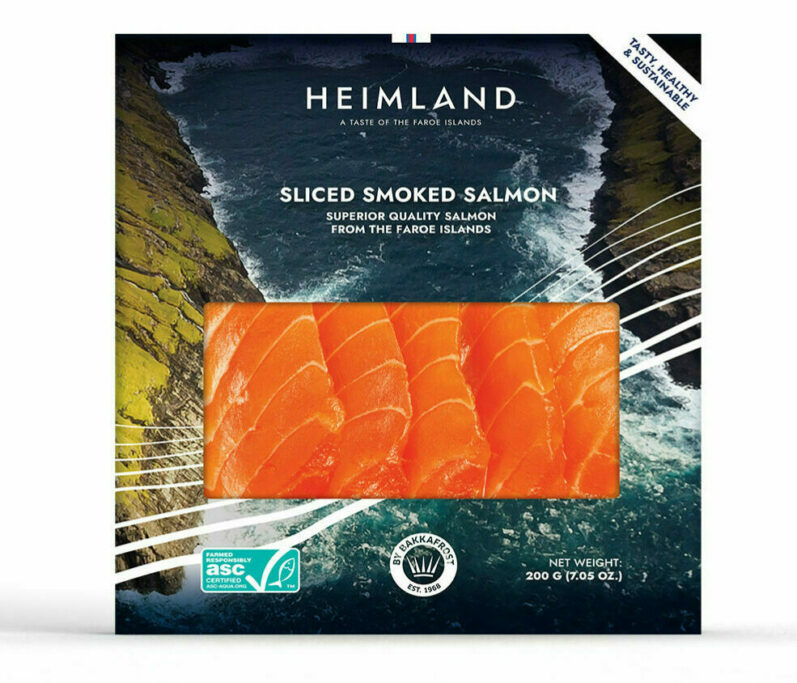
Look for the ASC logo on farm raised salmon products.
That’s the scoop on farmed salmon. It’s a great choice of fish to add to your diet and provides a variety of nutritional benefits. What’s more, as part of our ongoing work within GSI, our farmers are working hard to ensure that farmed salmon is not only healthy and delicious but also a great choice for our planet. If you’re interested to learn more take a read of our environmental efforts here.
If we’ve made you hungry now, the team at Seafood Nutrition Partnership have some great tips on how to cook salmon as well as recipe inspiration for National Seafood Month – and beyond.