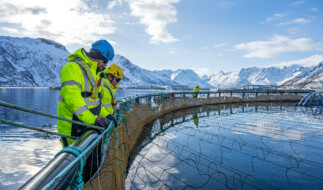
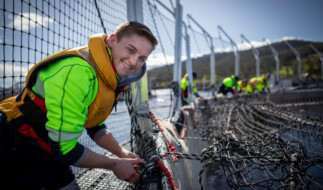
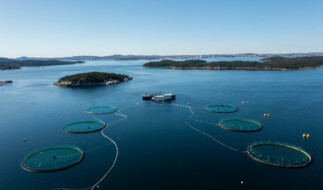
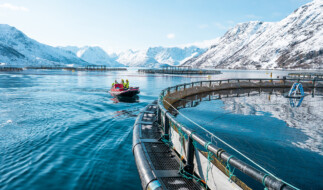
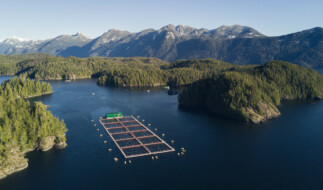
While farmed salmon is one of the most eco-efficient and sustainable forms of animal protein available, we have a responsibility to reduce emissions in line with global climate goals and ensure we continue to contribute to a climate-resilient food system.
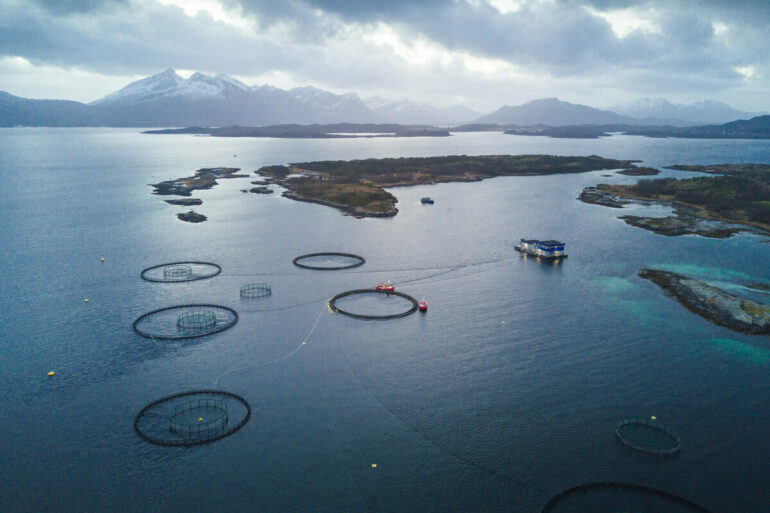
Climate change will affect how and where we produce food
The latest International Panel for Climate Change (IPCC) report states that global warming is likely to reach 1.5⁰C between 2030 and 2052 if warming continues at the current rate. After this point, even half a degree will significantly increase the risks of drought, floods, extreme heat, and poverty for hundreds of millions of people. Climate change also has a direct impact on the oceans, dramatically altering ocean ecosystems, including rising sea levels and temperatures, acidification, and oxygen loss. Many of these factors are already being seen and felt around the world.
Research shows that the world needs to cut its emissions in half by 2030 and reach net-zero by 2050 to prevent the worse effects of climate change.
The impact of climate change on food production
The single biggest threat of climate change is the collapse of food systems.Jerry Hatfield, Director of the U.S. Department of Agriculture’s National Laboratory for Agriculture and the Environment
There is a direct risk that a changing climate will reduce production and productivity of many agriculture products and impact livelihoods. These include:
- Rising heat and rainfall associated with climate change is increasingly degrading land, making soil less productive.
- Falling crop yields will push more people into poverty.
- Land currently used for agriculture or livestock farming will be required for climate change mitigation (e.g., reforestation to capture CO2, growing energy crops to reduce reliance on fossil fuels).
- Fish migration patterns will decrease productivity in half of all fisheries worldwide.
Rapid and large-scale changes, which do not damage natural resources or add to climate change, are needed to provide nutritious, climate-resilient food to a burgeoning global population.
The role of salmon farming as a climate-friendly food
Food is grown, processed, transported, distributed, prepared, and sometimes disposed of, all of which creates greenhouse gases and contributes to climate change. About a third of all human-created greenhouse gas emissions are linked to food. As a sector, there’s work to be done to reduce our footprint.
Blue foods can play a key role in creating healthier, low-carbon, climate resilient food systems. Blue foods generally have a lower carbon footprint than terrestrial animal-sources foods, and there are opportunities to further improve performance.
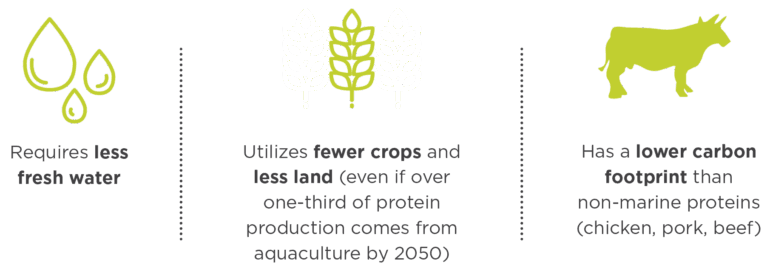
Farmed salmon is a healthy source of protein, with a low environmental impact and one of the lowest greenhouse gas profiles of all animal protein sources, offering an eco-friendly and climate-friendly option.
With only 5% of oceans currently being used for food production, there is an opportunity for oceans to contribute to filling the protein gap—particularly as land sources face pressure from a changing climate.
Taking action
While salmon has a lower carbon footprint than terrestrial animal proteins, we still need to improve and reduce our carbon footprint. Which is why we are working with World Wildlife Fund (WWF) to better understand our footprint and most importantly accelerate mitigation efforts.
A changing climate will also impact our farms and our fish. We must start now to better understand these changes and how to adapt to build knowledge and strengthen our resiliency for the future.